

A Good Women’s Blazer: How to Recognise Quality
A blazer is the most technical piece in a wardrobe. That is exactly why the difference between a good one and an average one shows the moment you put it on, as long as you know where to look.
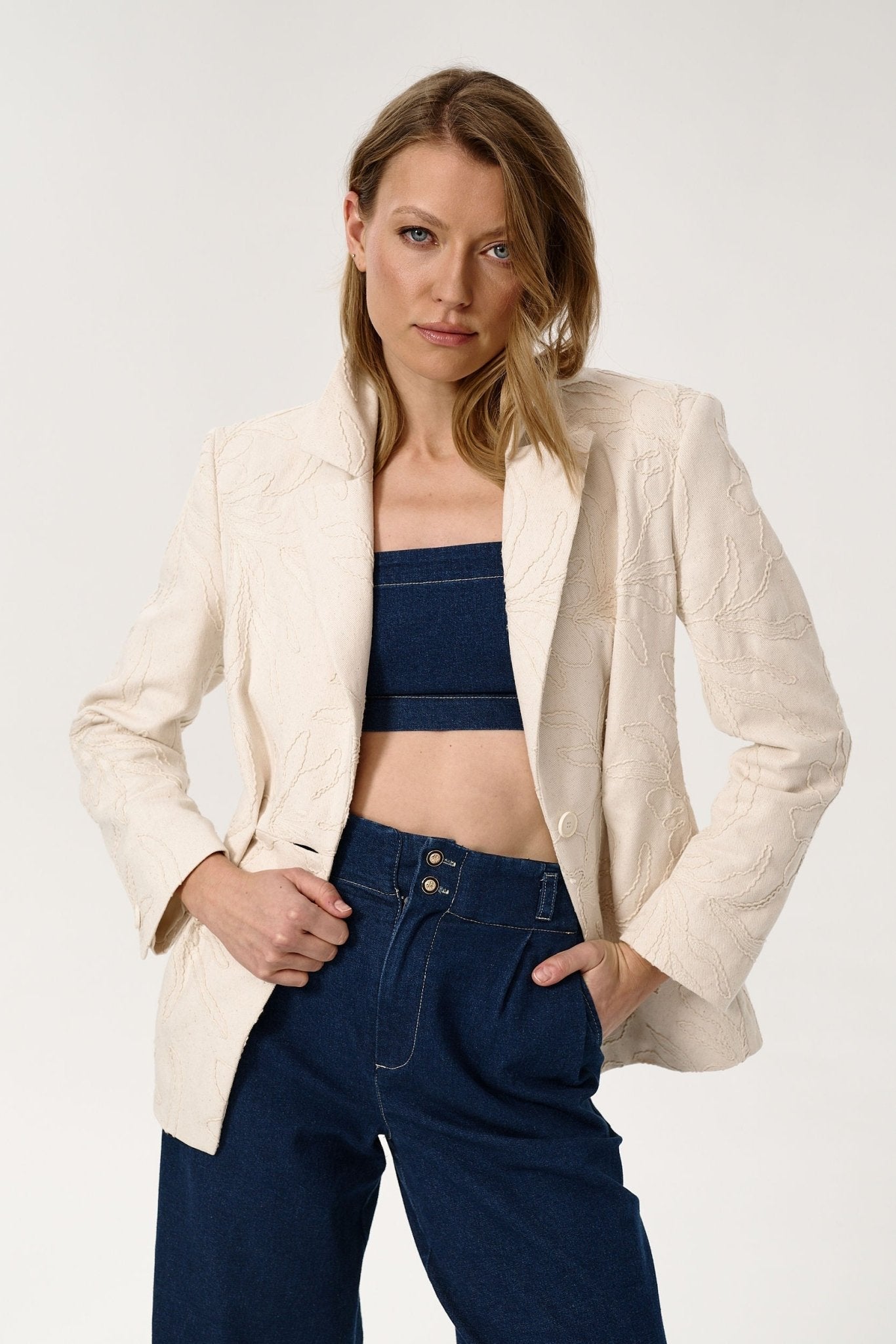
You can recognise a well-made blazer by five things: a shoulder line that ends exactly at the edge of your shoulder, a natural fabric, a sewn (not glued) front construction, careful finishing on the inside and solid trims. The shoulder line matters most, because it is the only one of these elements that cannot be fixed by alterations.
With a dress, what matters most is the cut and the fabric. A blazer is harder, because it is a construction: dozens of pieces that have to hold their shape on the shoulders for years. The shoulder line, the set of the sleeve, the construction of the lapel and the way the waist is shaped are the four places where a poorly made blazer gives itself away immediately. The good news is that you can check each of them yourself, in a few minutes, before you buy.
At Saintby we design and sew our blazers in Poland, in small series, so we check each of these things on our own cutting tables. Below we show what to look for, whether you shop with us or anywhere else.
1. The shoulder line, the test that decides everything
Start with the shoulders, before you look at anything else. The seam joining the sleeve to the body should end exactly where your shoulder ends. If it extends beyond it, the blazer will look borrowed, however good the fabric. This is the most important point, because this one thing cannot be fixed by alterations, so it decides the purchase.
Also check that the fabric lies flat across the back. Wrinkles or bubbles under the collar mean the blazer is poorly fitted through the shoulders, and that is a construction fault, not a question of size.
2. Fabric: start with the label
Turn the label over and check the composition. A premium blazer relies on natural fibres, because they decide how a blazer wears and how it ages. It is worth knowing the character of each fabric, because each one does something different.
Wool holds its shape like no other fabric: it does not bag at the elbows and returns to form after hanging. It also has a quality that is rarely mentioned: it regulates temperature, so a wool blazer works for three seasons of the year, not only in winter. Linen is the only sensible answer to heat. It breathes better than any other fabric and feels cool against the skin, and the fact that it creases is part of its character. Cotton with viscose is lighter and softer, less formal and easier to wear outside the office.
If you want to understand these differences in more depth, we describe them in a separate guide to natural fabrics. A cheap, fully synthetic fabric has two flaws that show over time: it develops a shine where it is under tension, and it does not let air through. A few percent of stretch for freedom of movement is fine. The problem begins when the fabric is almost entirely synthetic.
3. The front construction: sewn or glued
This is the most important and the least known point. The front of a blazer needs an interlining that gives shape to the chest and the lapels, and the way it is made does more than anything else to separate blazers into classes.
In a glued (fused) construction, the interlining is pressed onto the fabric with adhesive. It is the cheapest method. It looks good on the hanger, but over time, especially after dry cleaning, the adhesive can come away and create bubbles on the front that can no longer be removed. In a sewn construction, the interlining is stitched in, not glued, so the blazer moulds to the figure, adapts to the body over time and is not at risk of bubbling.
How can you check this in a shop? Gently pinch the fabric on the front, between the buttons and the lapel, and try to separate the outer layer from the lining. If you can feel a loose, movable layer between them, the construction is sewn. If everything is stiffly bonded into one, the construction is glued.
4. Waist shaping: a belt or the construction
The way a blazer defines the waist also divides into a cheaper and a better approach. Shaping with a belt is a compromise, because a belt always looks like an accessory attached to a straight form. Shaping through construction, with darts and seams built in at the cutting stage, holds its form on its own. The blazer is then fitted because it was designed that way, not because someone has cinched it at the waist.
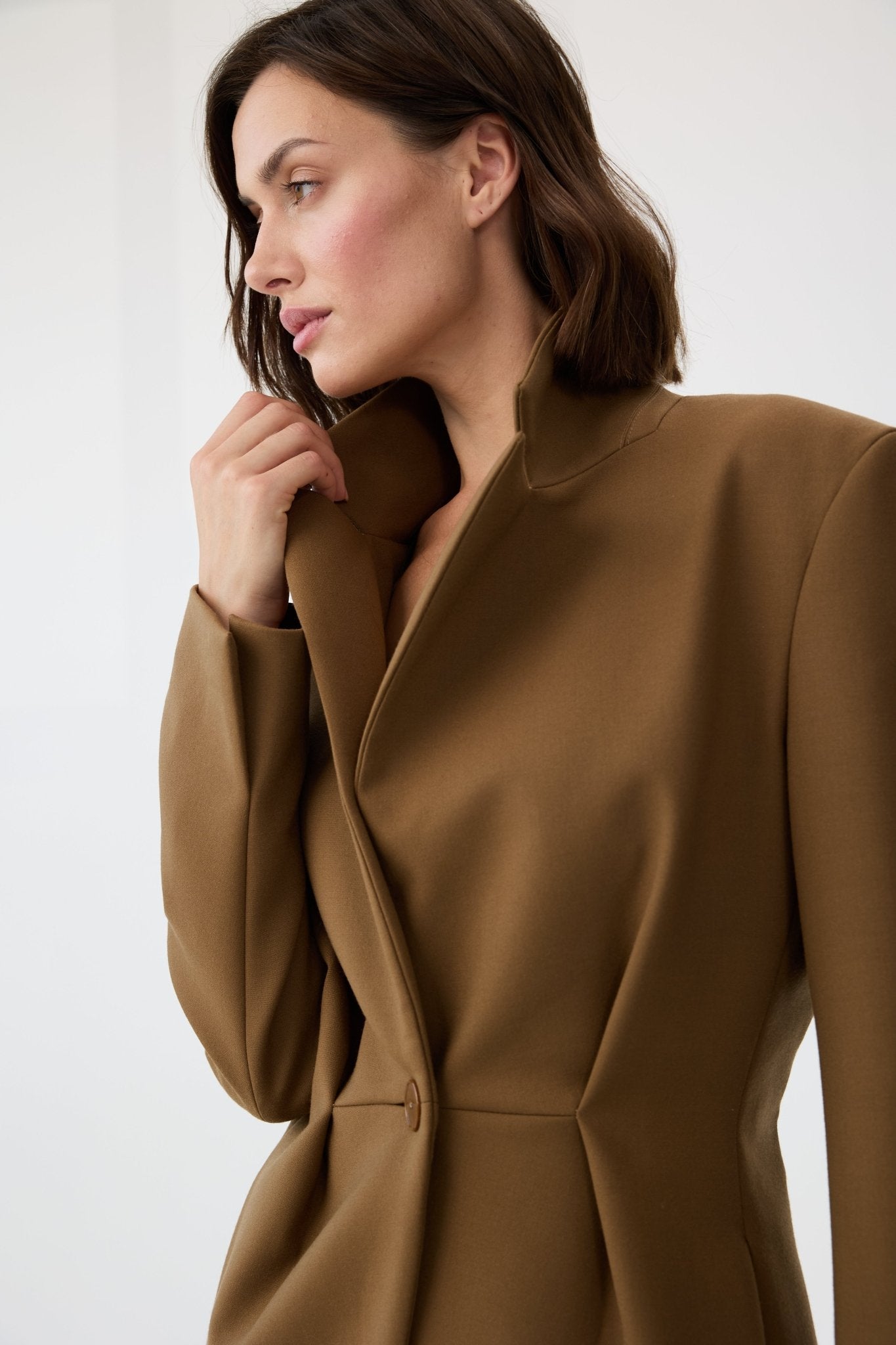
Our Isola fitted blazer is an example of the second approach: the waist is built by the construction, not by a belt.

A construction-fitted cut, the most versatile in the whole collection. It works with a dress, a skirt and trousers.
5. Finishing and trims
Quality reveals itself where few people look. Turn the blazer inside out and examine the inside. The edges of the fabric should be bound and neat, not frayed, and the lining should lie smoothly and be sewn in all the way round. Finally, the details you handle every day, which are the first to fail in cheap blazers.
| Element | A good sign | A warning sign |
|---|---|---|
| Buttons | Firmly attached, with a shank | Loose, wobbly |
| Buttonholes | Evenly stitched, no loose threads | Frayed edges |
| Lining | Smooth, sewn in all the way round | Pulls, puckers |
| Lapels | Symmetrical, lying flat | Lifting, uneven in width |
| Collar | Lies flat against the neck | Stands away, forms bubbles |
- Shoulder line ends at the edge of the shoulder (most important)
- Fabric composition mostly natural fibres
- Sewn front, not glued (the pinch test)
- Waist from the construction, not from an attached belt
- Inside bound edges, smooth lining, solid trims
How to wear a blazer: four contexts
A blazer is the hardest-working piece in a wardrobe, because it replaces nothing and changes everything. One good blazer doubles the number of outfits you can build from what you already own.
For the office: a fitted blazer, a simple shirt or bodysuit, a pencil skirt or creased trousers. The cleanest possible line. For the evening: a blazer draped over the shoulders, without putting your arms in the sleeves, over a dress or a bodysuit with a neckline. A gesture, not a garment. For every day: a shorter jacket, a T-shirt, high-waisted jeans. The blazer lifts the outfit from casual to considered. In summer: a linen blazer and a simple top, because in the heat linen does what no other fabric can.
If you are building a wardrobe from a few well-chosen pieces, the blazer is its natural pillar. We wrote about this approach in more detail in our piece on a timeless Old Money wardrobe.
Which colour to choose first
Against the instinct that says black, the most versatile is an off-white or cream blazer: it brightens the face, looks more expensive than it is and goes with every colour in your wardrobe. A black wool blazer, in turn, is the foundation without which a capsule wardrobe does not work. If you are buying one, choose the colour you are missing most.
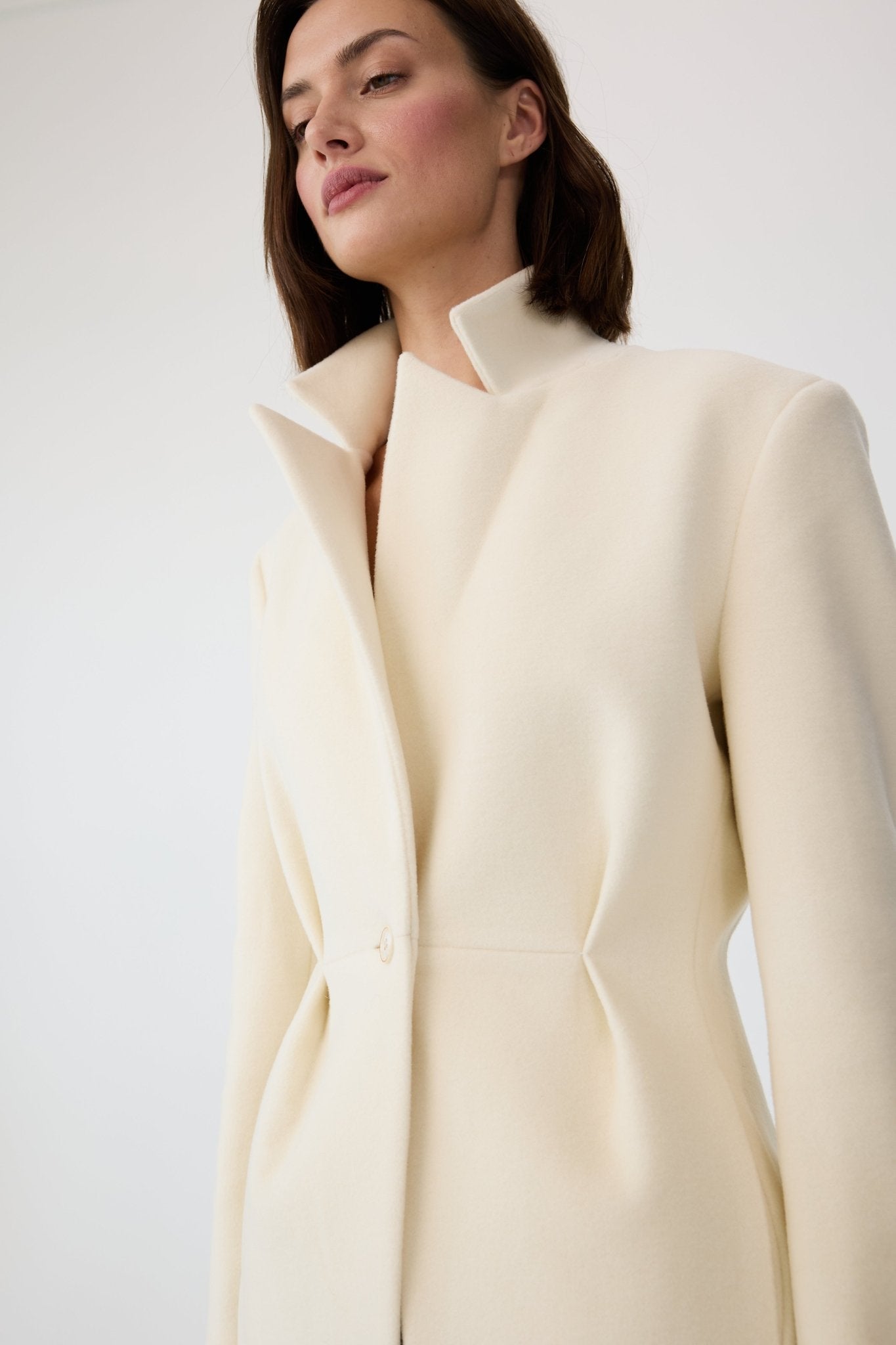
A versatile light shade, temperature-regulating wool for three seasons.
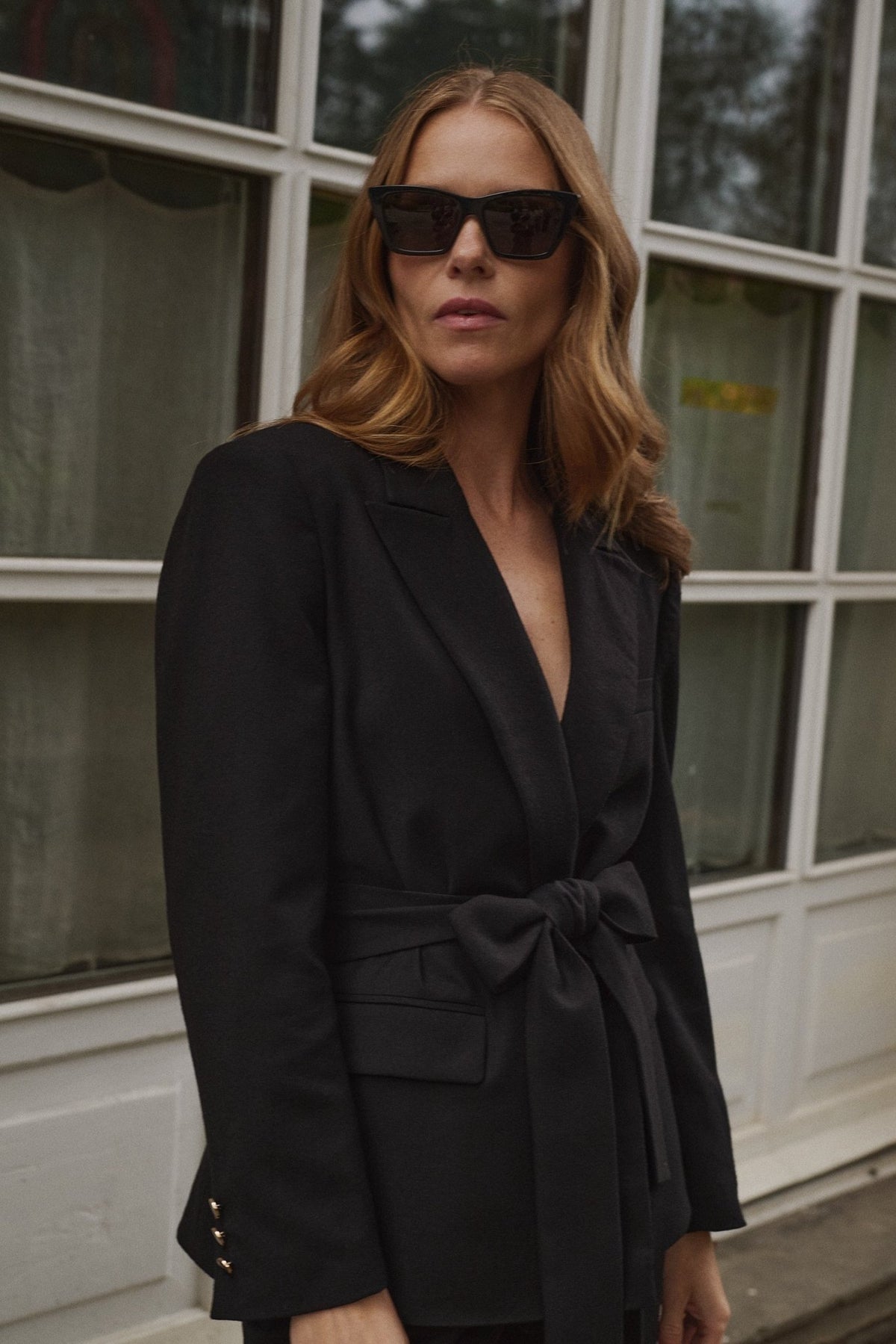
A classic foundation of the wardrobe. A deep black, not a faded one: that is the difference between premium and cheap.
We design and sew Saintby blazers in Poland, with care for every one of these details.
View the blazer collectionFrequently asked questions
How do you recognise a good-quality blazer?
By five things: a shoulder line that ends at the edge of the shoulder, a natural fabric composition, a sewn front construction, waist shaping built into the construction, and solid finishing and trims. The shoulder line matters most, because it is the only one that cannot be corrected by alterations.
What is the difference between a glued and a sewn blazer?
In a glued blazer, the front interlining is pressed on with adhesive, which is cheaper but can come away over time and create bubbles. In a sewn blazer it is stitched in, so the blazer sits better, moulds to the figure and lasts longer.
Is a wool blazer only for winter?
No. Wool regulates temperature, so it does not overheat you on a warmer day. A well-made wool blazer works for three seasons of the year.
How much should a good women’s blazer cost?
It depends on the fabric, the construction and where it is made. A blazer in a natural fabric, with a sewn construction and made in a short series, costs more than a mass-produced synthetic one, but over the years of wear it works out cheaper.
Author: Anna Baj, founder of Saintby. The brand designs and sews premium womenswear in Poland.

Leave a comment
This site is protected by hCaptcha and the hCaptcha Privacy Policy and Terms of Service apply.