

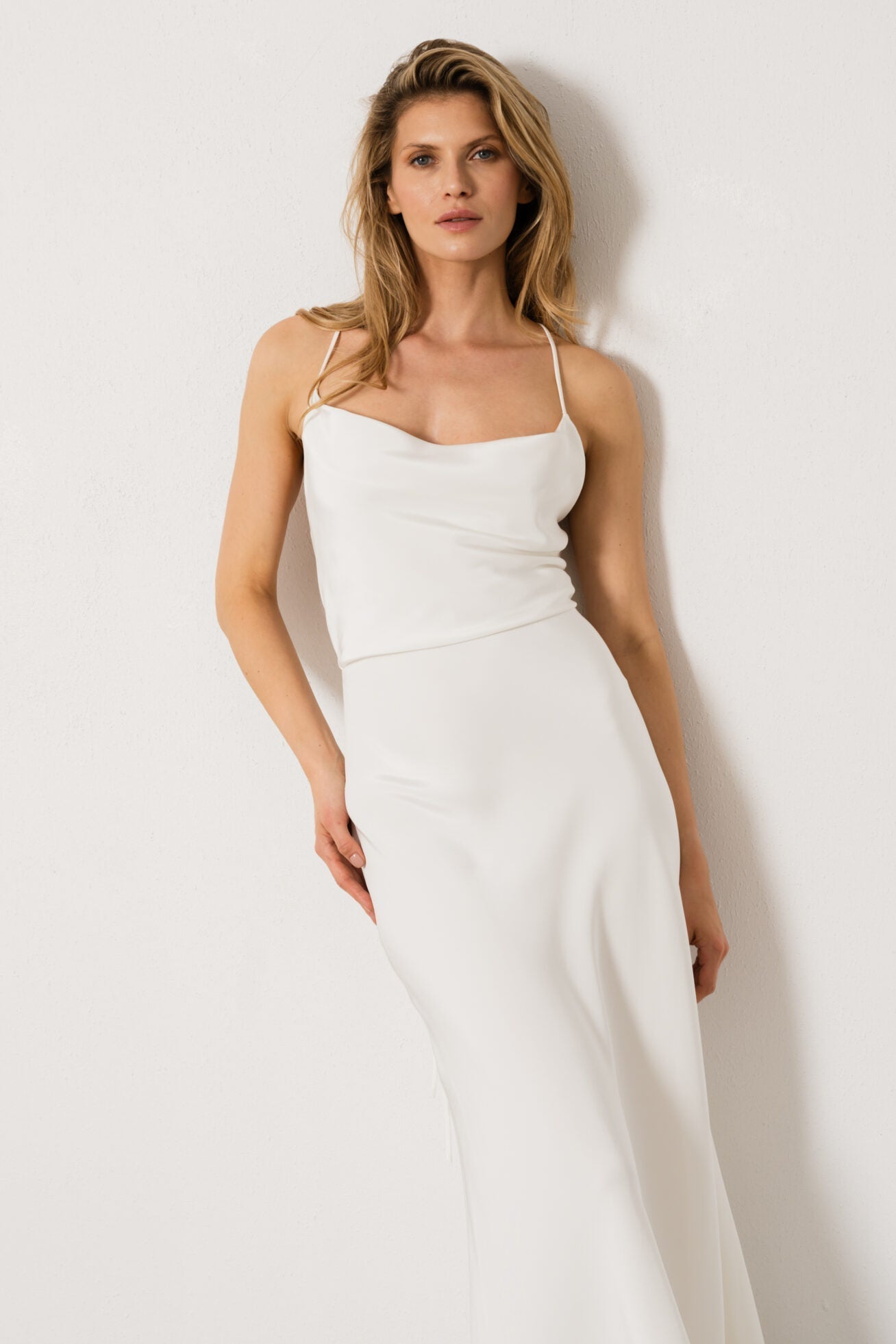
Silk Satin or Crepe: Which Dress to Choose
A silk wedding dress is a choice that begins with the fabric. Both are silk, both cost about the same, yet they look completely different and behave differently over the whole day. Here is how to choose between silk satin and silk crepe.
Silk satin or crepe: what is the difference
Almost every client who tries on a silk dress asks this question. And rightly so, because it is not a cosmetic choice.
Let us start with what is often missed: satin and crepe are not two different materials. They are the same silk, only woven in a different way. A satin weave lays the threads so that the surface is smooth and reflects light. A crepe weave twists the threads more tightly, which makes the surface matt and slightly grainy.
Every other difference follows from this one technical decision.
Silk satin
- Reflects light, has a clear sheen
- Smooth and cool to the touch
- Flows over the figure, pours over it
- Looks classically bridal
- Emphasises every unevenness
- Changes depending on the light
Silk crepe
- Absorbs light, is matt
- Slightly grainy to the touch
- Holds its line, does not cling
- Looks modern and calm
- Forgives unevenness of the figure
- Looks the same in any light
Light: the most important factor nobody thinks about
You try the dress on in a salon, under one kind of lighting. You wear it for over ten hours, under several completely different ones.
Satin reacts to every change. In a church it reflects the cool light of stained glass and looks almost silvery. In the reception hall, by warm candlelight, it takes on a golden tone. In photos at sunset it gains a depth that no synthetic imitation can give. This is an advantage and a risk at the same time, because the dress looks different from the fitting room.
Crepe is predictable. Its matt surface absorbs light, so the dress looks the same at noon and at eleven at night on the dance floor. If you want to be sure you will look good in every photo, crepe is the safer choice.
What this means for photography
Wedding photographers usually say that satin is more striking but more demanding. It needs considered light, because in harsh sun it can blow out. Crepe is more forgiving and works better outdoors in full sun.
Silhouette: which fabric is more forgiving
This is where the difference is greatest and most practical.
Satin pours over the body and follows its every line. On a smooth figure it looks spectacular. But because it reflects light, it emphasises everything underneath: creases in underwear, unevenness, every detail. That is why the right underwear matters so much with satin, and ideally a dress with built-in support.
Crepe has a denser, heavier structure and behaves more architecturally. Instead of pouring over the figure, it holds its own line and creates a smooth surface regardless of what is underneath. This makes it far more forgiving.
A simplified rule: if the effect matters to you and you feel confident in fitted clothes, choose satin. If you want to look impeccable without thinking about it all day, choose crepe.
Character: classic versus modern
The two fabrics send a different message, even when the dress has an identical cut.
Satin says “wedding”. The sheen of silk satin is so strongly associated with a wedding dress that even the simplest design in this fabric looks ceremonial. That is why silk satin wedding dresses remain the most classic choice. It is a decision for a woman who wants there to be no doubt that this is her day.
Crepe says “evening”. Its matt surface makes the dress look more like an evening gown than bridal wear. That is an advantage if you plan to wear it again later: without a veil and bouquet, crepe naturally becomes an evening dress, while satin still looks bridal.
A civil ceremony
For an intimate ceremony at a registry office, crepe usually works better. In a small interior and in daylight satin can feel too ceremonial, while crepe gives an effect of elegant restraint.
Comfort: the season and the length of the day
Silk, whatever the weave, has a quality that is rarely mentioned before a wedding: it regulates temperature. It adapts to body temperature, so it does not overheat you in hot weather or chill you on a cool evening. A polyester satin dress in July turns into cling film. A silk one stays comfortable.
Between satin and crepe the difference is subtle, but it exists. Satin is thinner and cooler to the touch, so it can be more pleasant for a midsummer wedding. Crepe is slightly heavier and gives marginally more warmth, which matters for an autumn ceremony or a cool church.
The same dress, two fabrics
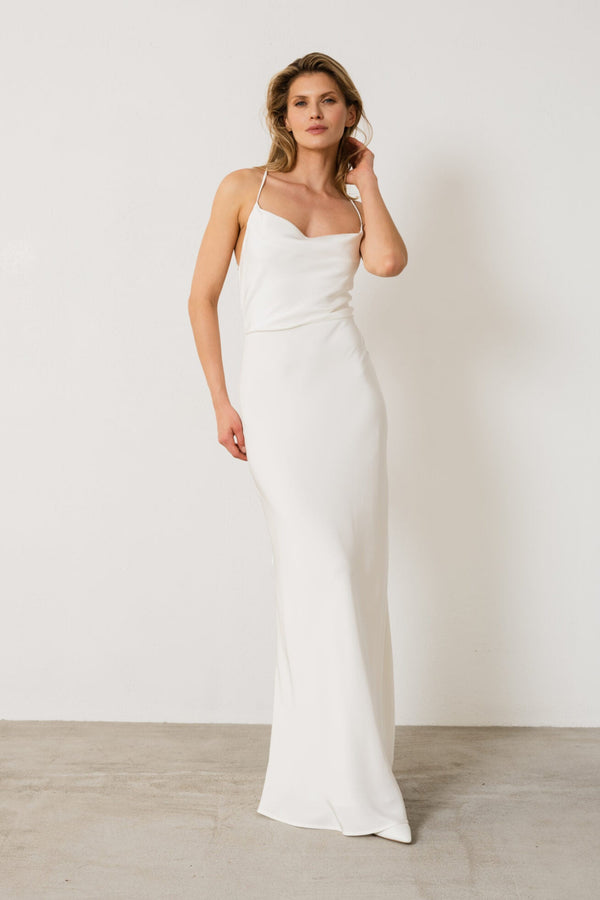
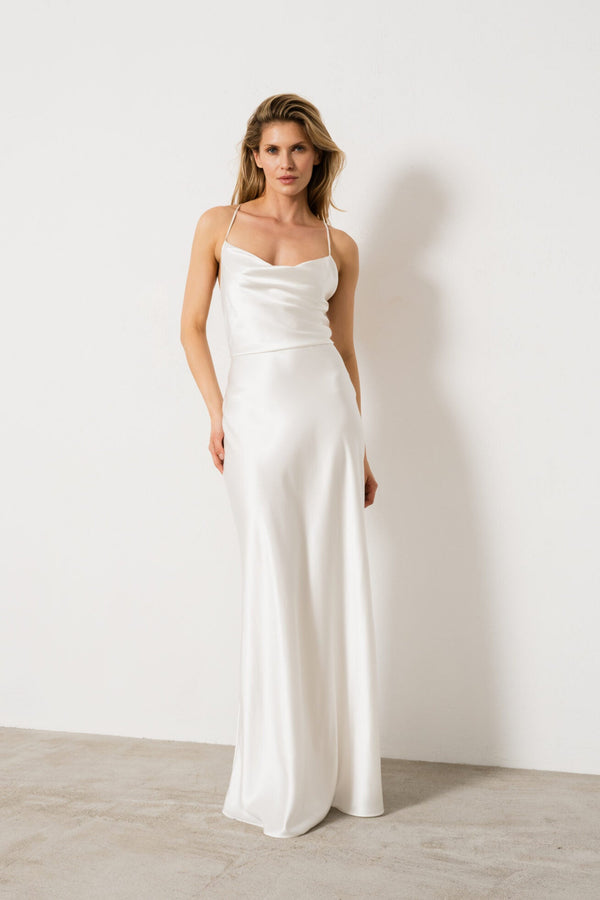
In our collection you can see this choice directly. Positano and Valencia are the same cut made in two different silks: an identical construction, an identical line, a different fabric. They are two versions of the same silk wedding dress.
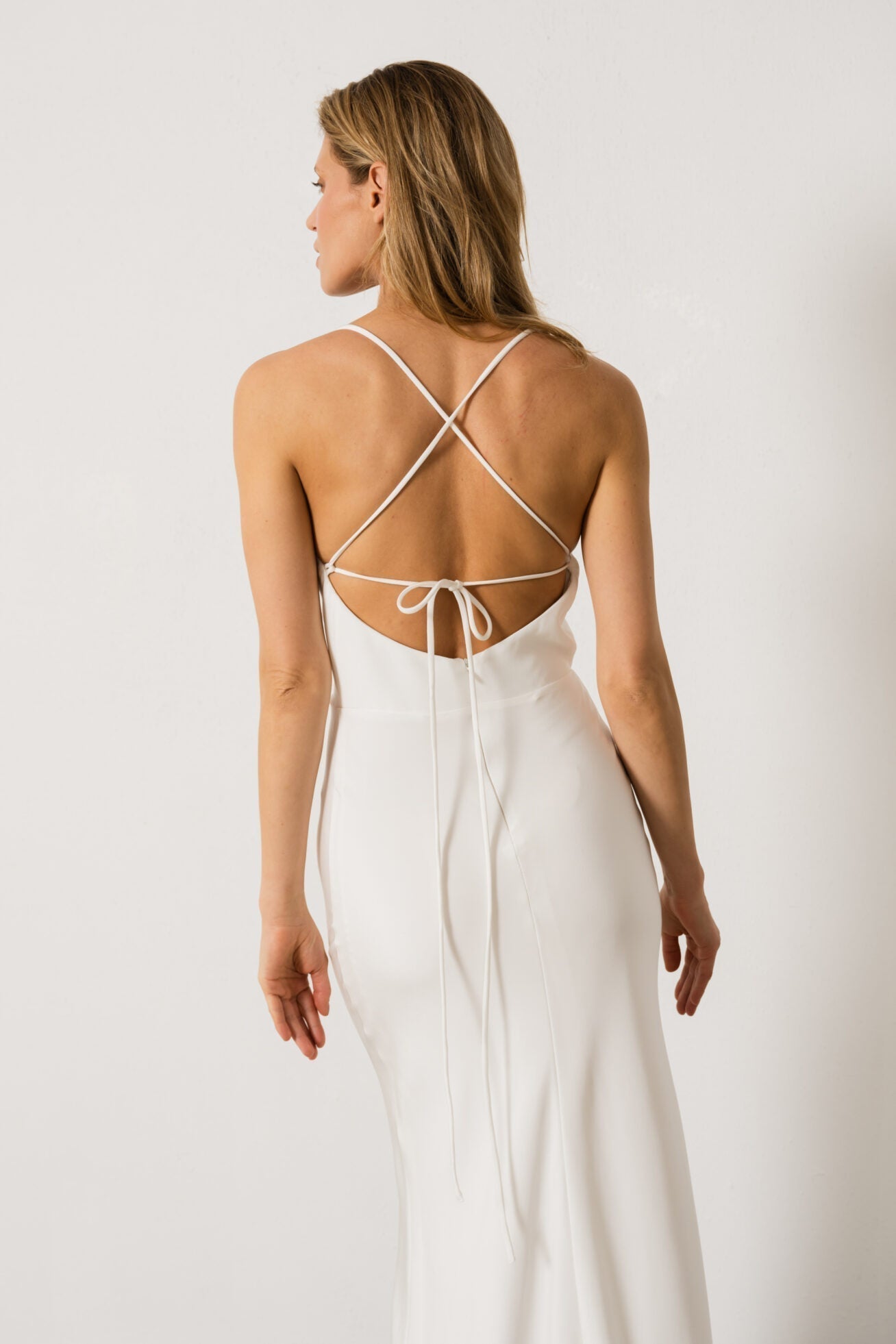
This is a rare situation, because it lets you compare not two different designs, but the pure difference of the material. Positano in silk crepe is calm, matt and architectural, with a deep back neckline as its only strong accent. Valencia in silk satin is lustrous and classically bridal, and the light works on it all day long.
Clients who try on both usually know within the first thirty seconds which one is theirs.
Care and storage
Both fabrics need dry cleaning, not washing. Silk should not be rubbed or wrung.
After the celebration, do not store the dress in a plastic cover, but in a cotton one that lets air through, somewhere without access to light. Sunlight weakens silk fibres and causes yellowing, and for a dress you want to keep, it is the most common cause of damage.
Satin needs a little more attention here, because any discolouration is more visible on a smooth, lustrous surface.
Frequently asked questions
Is silk satin the same as satin?
No. Satin is the name of a weave, not of a material. It can be silk, polyester or viscose. Only silk satin regulates temperature and has that characteristic deep sheen. Polyester shines in a flat, mirror-like way.
Which fabric creases more?
Crepe creases less thanks to its denser structure. Satin can show creases after long sitting, although silk is naturally elastic and recovers its shape.
Is crepe cheaper than satin?
Not necessarily. The price depends on the weight of the silk, not on the weave. A good crepe can cost more than a thin satin.
Which looks better in photos?
Satin is more striking, but it needs considered light. Crepe is predictable and more forgiving, especially outdoors in full sun.
Can a satin dress be worn after the wedding?
It can, but its sheen means it still looks bridal. Crepe moves into the role of an evening dress more naturally.
Will a silk wedding dress work in summer?
Yes, and better than any synthetic one. Silk regulates temperature, so it does not overheat you in hot weather or chill you on a cool evening. A polyester satin dress becomes unbearable in July.
What silk weight is good for a dress?
For wedding dresses, a heavyweight silk of around 40 momme works well. Thin silk emphasises every unevenness, while a substantial one wraps the figure.
Can the same design be ordered in both fabrics?
In our collection, yes. Positano is made from silk crepe, Valencia from silk satin, and the cut of both is identical.
The same cut, two fabrics
Positano and Valencia have an identical construction and an identical line. The only difference is the silk: matt crepe versus lustrous satin. We sew both in Poland, as individual pieces.


Leave a comment
This site is protected by hCaptcha and the hCaptcha Privacy Policy and Terms of Service apply.