

Saintby guide · Shirts
A shirt that does not look cheap. What to look for
A shirt gives away its price faster than any other piece of clothing. You only need to know where to look: the collar, the buttons, the shoulder seam and how the fabric behaves against the light.
A blazer can only be judged once it is on. A dress after a few steps. A shirt is judged in three seconds, and from the distance at which the person across the table sees you. That is because a shirt sits close to the face, has many visible details and is made from a thin fabric that hides no construction fault.
That is good news. If everything is visible, everything can be checked before you pay. Below are the seven places I look at as a designer when I pick up someone else’s shirt, and which we check at Saintby on every piece before it leaves the workroom.
Seven places that reveal a shirt’s quality
1. The fabric against the light
Hold the shirt up to a window. A good fabric has an even, dense weave, with no thin patches and no “haze” where the threads drift apart. If you can see the shape of your own hand through it, in a light colour it will also show through on the body.
The second thing is the sheen. Silk reflects light softly and deeply, because each fibre has a triangular cross-section and works like a prism. Polyester shines flatly and uniformly, a little like cling film. You can see this difference in photos and from across the room, and it is most often what makes a shirt “look cheap”, even if it is hard to say why.
The third test is touch. Squeeze the fabric in your hand for five seconds and let go. Good-quality cotton will keep light creases that quickly smooth out. A fabric that looks like paper after this test will look like that after every hour sitting at a desk.
2. The collar
The collar is the shirt’s calling card and the hardest part to sew. Check three things. Are both points the same length and at the same angle? Does the collar lie flat, without waves or bubbles along its whole length? And at the back, by the nape, does it sit close to the neck instead of standing away?
Bubbles on the collar are most often a badly fused interlining, the stiffening layer inside. In cheap shirts it comes away after a few washes, and from then on the collar always ripples. That cannot be ironed out.
3. The placket and buttons
The placket is the strip of fabric that carries the buttons and buttonholes. It should be as straight as a ruler from the collar to the hem. If it ripples, the shirt was sewn in a hurry or the fabric was cut without regard to the grain.
Then the buttons. A good button is sewn on with a so-called shank, a small gap from the fabric wrapped in thread. This way the button does not pull on the fabric and is easy to fasten. Buttonholes should have a dense, even stitch with no loose ends. After the first wash, loose ends turn into frayed edges.
The most important test happens in the fitting room: button the shirt and stand side-on to the mirror. If the fabric gapes between the buttons at bust level, it is not a matter of your figure, but of the button spacing or the construction of the front. In a well-cut shirt, a button falls exactly at the widest point of the chest.
4. The seams
Turn the shirt inside out. The side seams and sleeve seams should be finished so that no frayed fabric edges are visible. In thin fabrics such as silk, an enclosed seam works best, with the edges tucked inside. The fabric then does not fray in the wash and the seam does not mark the skin.
From the right side, check that the fabric is not puckered along the seam. Slight puckering means the thread was pulled too tight or the stitch was too sparse. After washing, the puckering gets deeper.
5. The shoulder line
In a classic shirt, the shoulder seam should end exactly at the shoulder bone. If it drops lower, the shirt is too big, even if it fits well everywhere else. If it ends higher, it will pull with every movement of the arm.
The exception is an oversized cut, in which the shoulder is deliberately dropped. You can tell an oversized shirt from a shirt in the wrong size by its proportions: in a considered design, the dropped shoulder goes together with a suitably wider body and a longer sleeve, so the whole looks intentional. In a shirt that is too big, only the shoulder hangs.
6. The cuff and sleeve
The cuff should have the same quality of finish as the collar: even edges, flat lay, symmetrical buttons. With your arms down, a sleeve fastened at the cuff should reach the base of the thumb, and when you raise them, it should not ride up beyond the wrist.
7. The hem
The hem should be narrow and even. Length matters in practice: if you want to tuck the shirt into a skirt or trousers, it must reach at least a few centimetres below the hip line, otherwise it will come out the first time you bend down.
The fitting-room test, 60 seconds
Fasten all the buttons and stand side-on: check that the front does not gape at the bust. Raise both arms above your head: the shirt should not come out of your trousers or pull at the armpits. Sit down: the placket should stay straight. Finally, go to the window and check the fabric against the light.
The fabric decides the character of a shirt
The same cut made from different fabrics gives three completely different garments. Before you choose a design, decide what the shirt is for.
| Fabric | Best for | How it behaves | Care |
|---|---|---|---|
| Silk | Evenings, important meetings, an ambitious office | Reflects light softly, drapes fluidly, regulates temperature | Hand wash in cool water or dry clean |
| Cotton | Every day, work, layering | Breathes, holds the shape of the collar, withstands frequent washing | Wash at a low temperature, iron while slightly damp |
| Lyocell | Travel, long days when comfort matters | Soft and cool to the touch, creases less than cotton and linen, though it is not free of creasing | Gentle wash, dry flat |
If you want to know more about recognising good silk and how its types differ, we write about it in more detail in the article Silk satin or crepe.
The cut: three designs, three different jobs
The fitted shirt
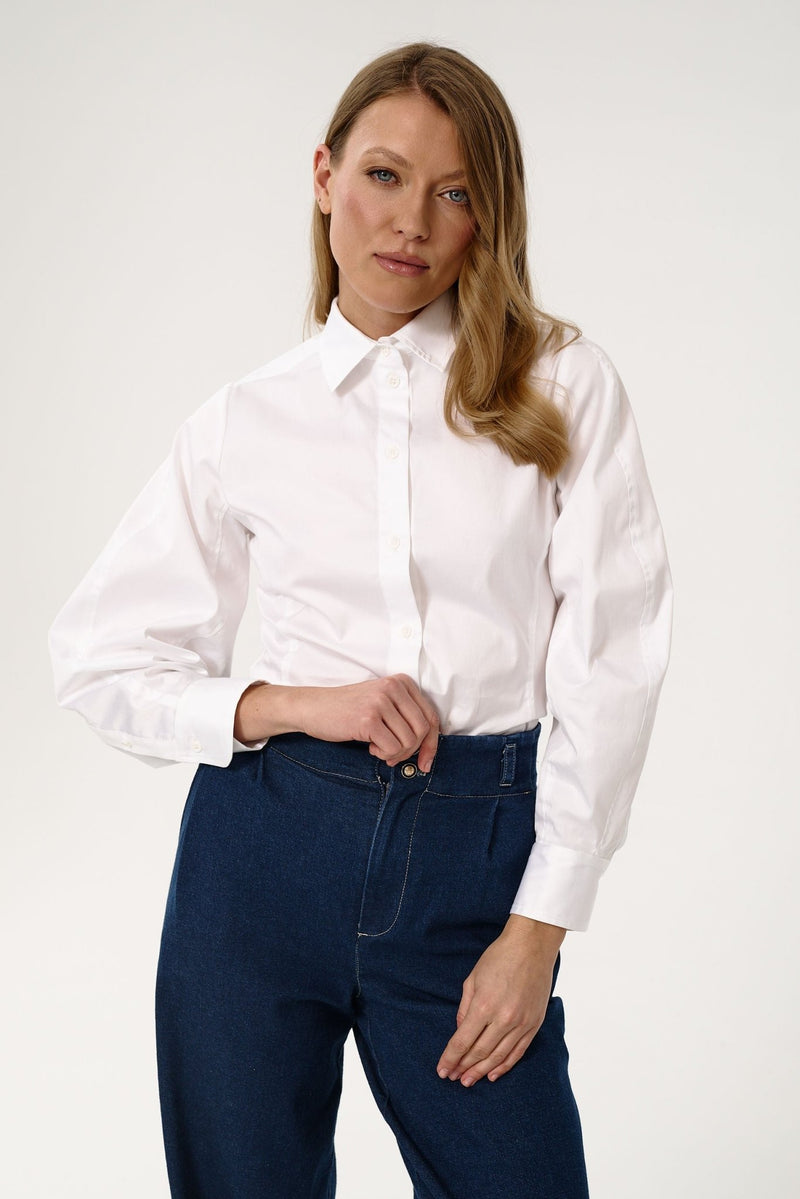
It has darts, seams that gather the fabric at the waist and shape the shirt to the figure. It is the most formal design and the best choice under a blazer, because it creates no excess fabric at the waist. The button test at the bust matters most here, because in a fitted cut every construction fault shows immediately. An example is the Ponzano fitted cotton shirt.
The oversized shirt
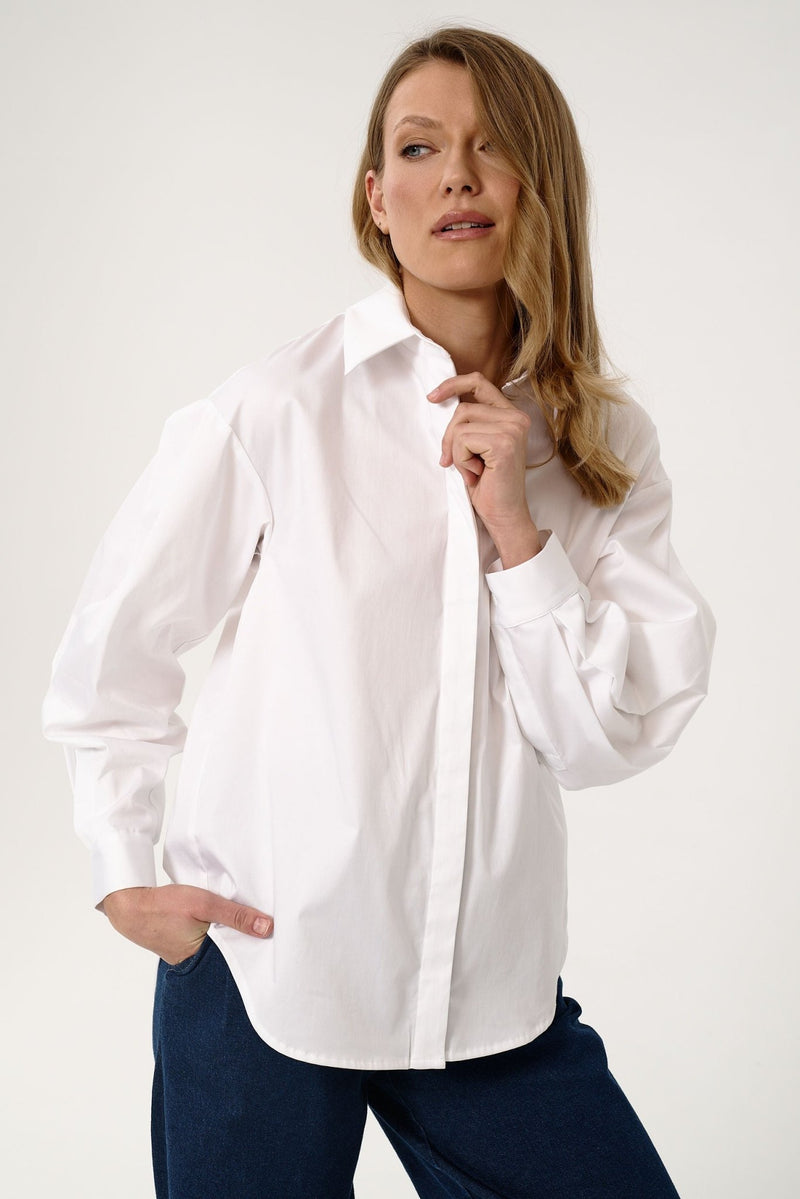
It works by contrast with a fitted bottom half: slim trousers, a pencil skirt, a slender bodysuit underneath. In an oversized cut the difference in quality is especially easy to see, because a large amount of fabric emphasises both its refinement and its shortcomings. A thin, stiff cotton in this cut looks like a sack. A dense, soft fabric falls into controlled folds. Such a shirt is the Molise oversized cotton shirt.
The shirt with a sash
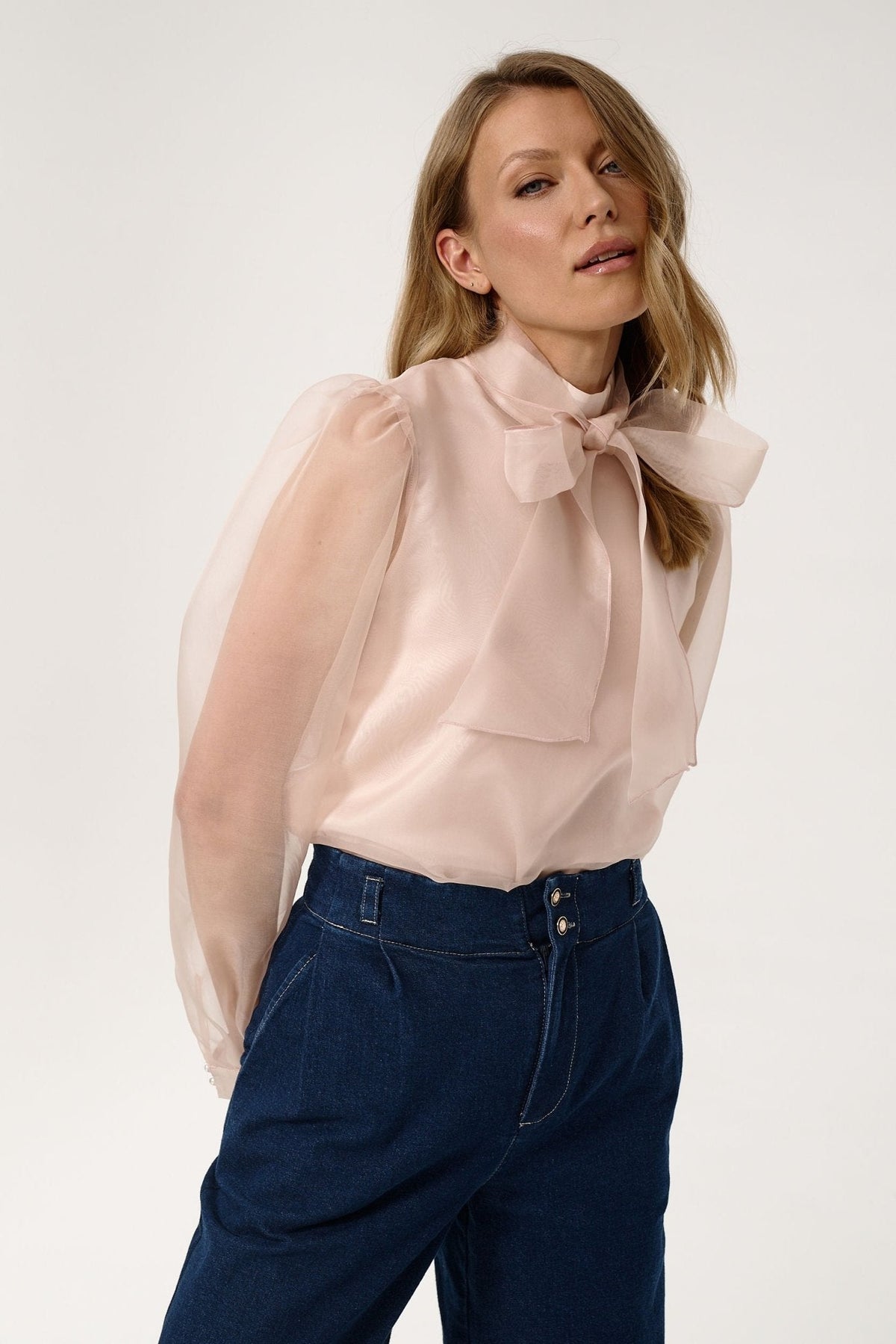
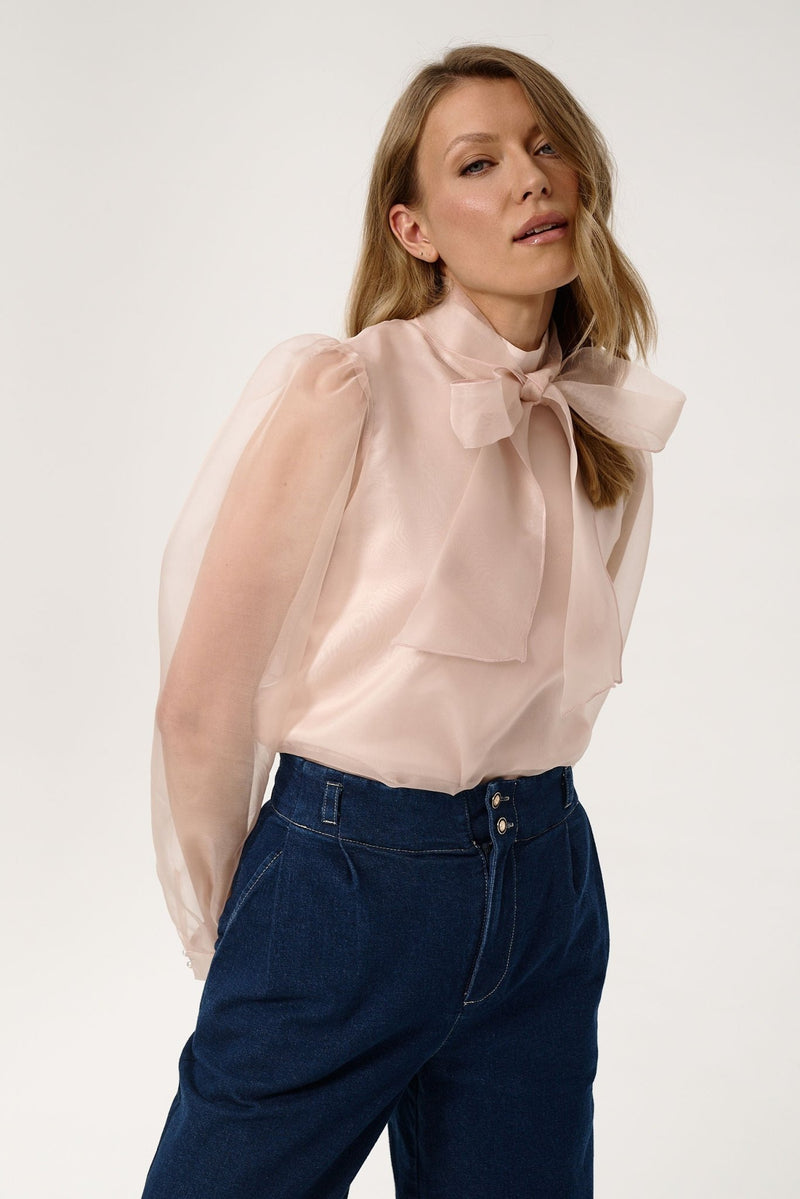
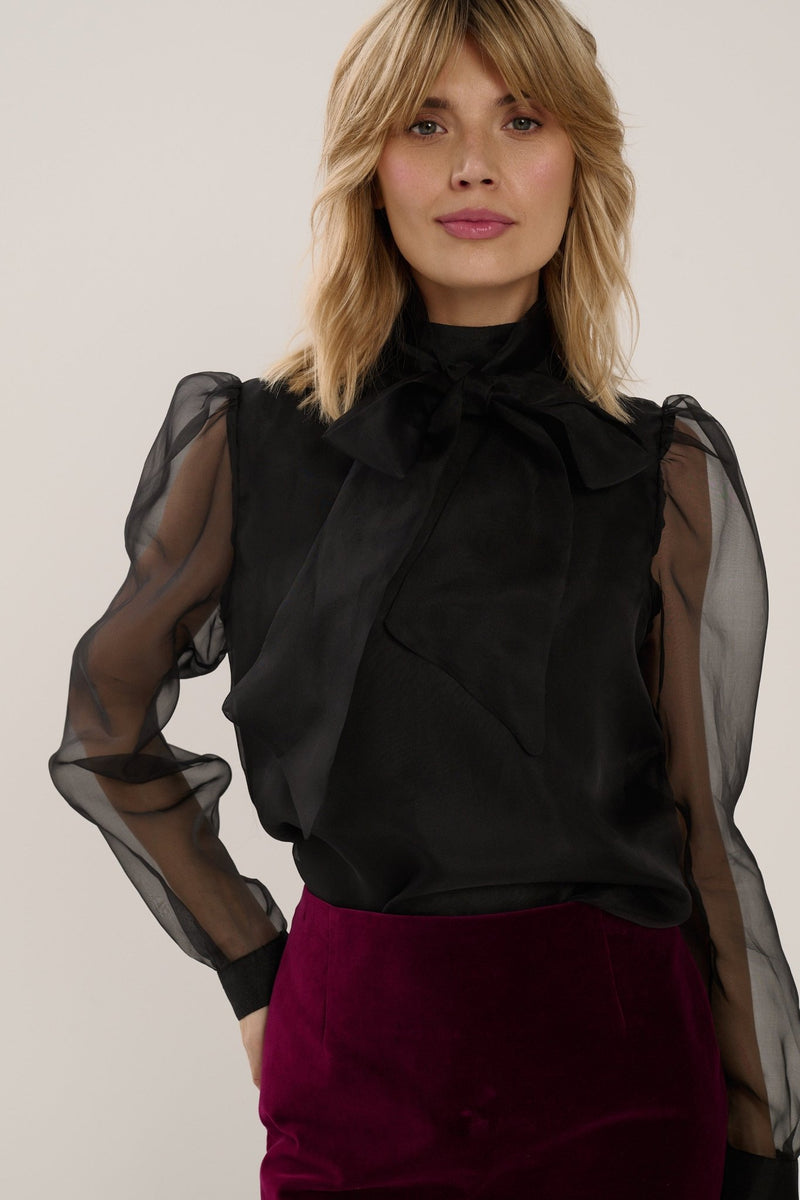
A sash at the neck replaces jewellery and frames the face. With this design, check that the sash is made from the same fabric as the shirt and has narrow, evenly rolled edges. A sash with a thick, uneven hem does not fall into a soft bow, it sticks out. This is the design Saintby is best known for: the pink silk Ardore shirt with a sash and its blackversion. We describe ways of tying the sash on the collection page.
Why a cheap shirt looks cheap
If you put everything above together, there are four signs of a cheap shirt, and they almost always appear together. A flat, film-like sheen on the fabric. The front gaping at the bust. A collar that starts to ripple after a few washes. And a shoulder seam in the wrong place, which makes the shirt look borrowed.
None of these problems comes from the design. They all come from cutting corners: on the fabric, on sewing time, on checking every piece. That is why we sew our shirts in Poland, in short series. Only at a small scale can every collar and every placket be inspected before the shirt reaches a client.
Ready-made outfits for autumn
For the office: a fitted shirt and wool
The Ponzano shirt tucked into creased trousers, and over it the black Pagani wool blazer. The collar laid over the blazer lapels, one button undone. An outfit that looks formal, but not stiff.

View our shirt collection · View our blazer collection · View our trouser collection
For dinner: silk and pink
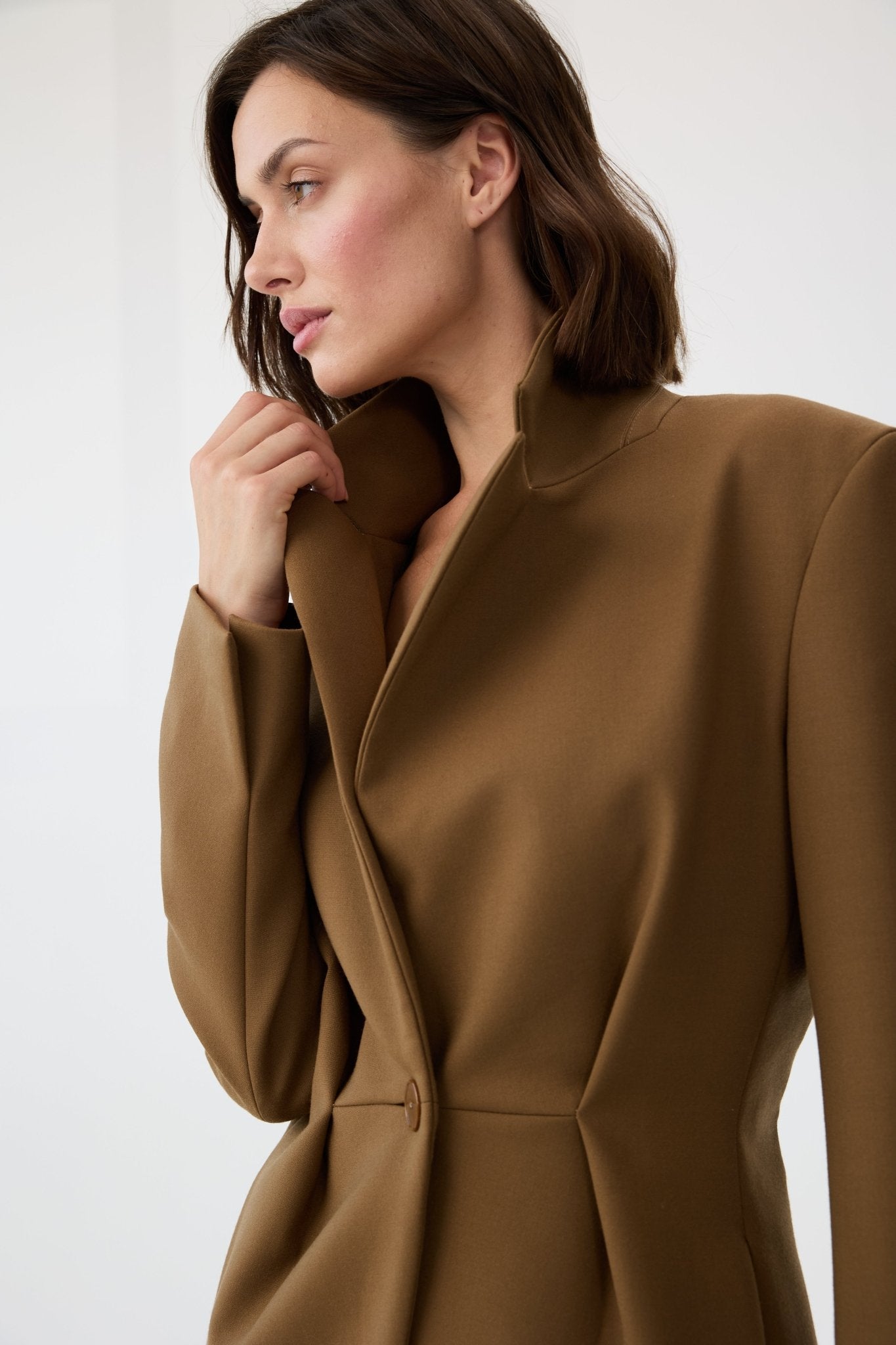
The pink Ardore shirt with the sash tied loosely, its ends hanging, with a high-waisted skirt. For a cooler evening, the Isola blazer in brown camel draped over the shoulders. A warm contrast of powder pink and caramel, three different textures.
View our shirt collection · View our skirt collection · View our blazer collection
For the weekend: oversized as a layer
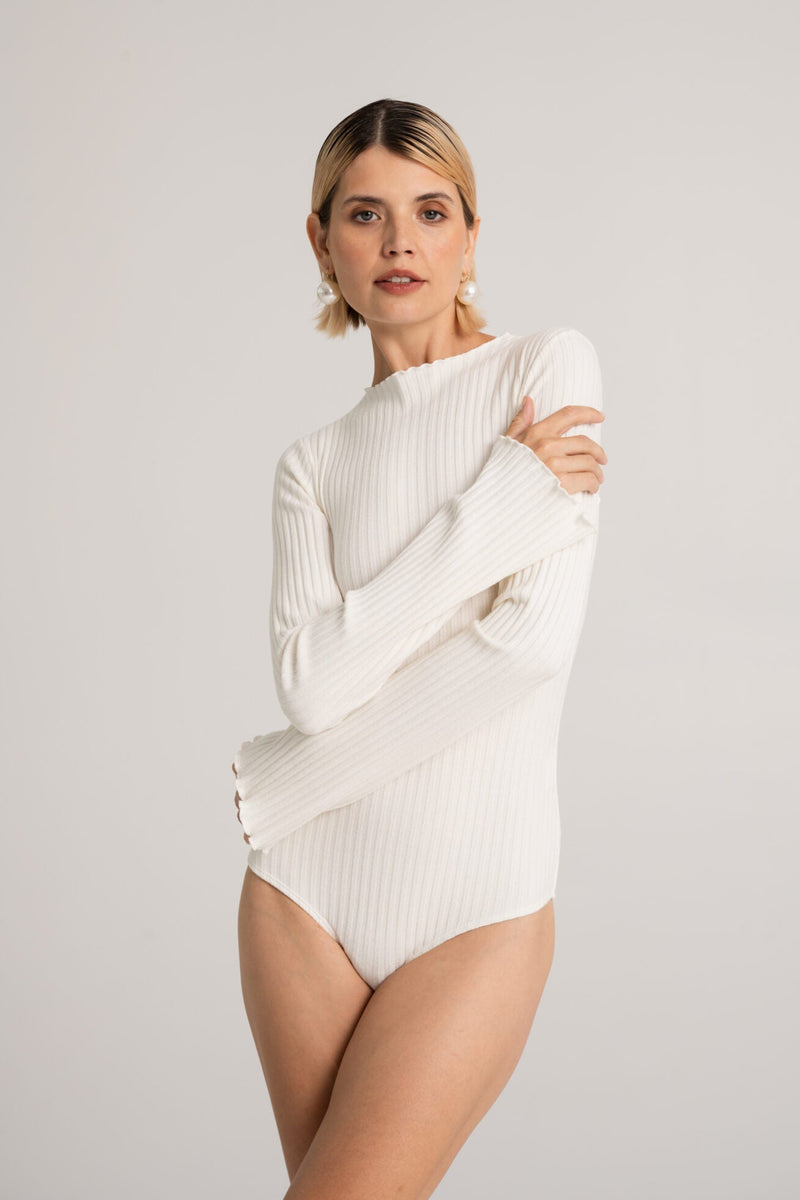
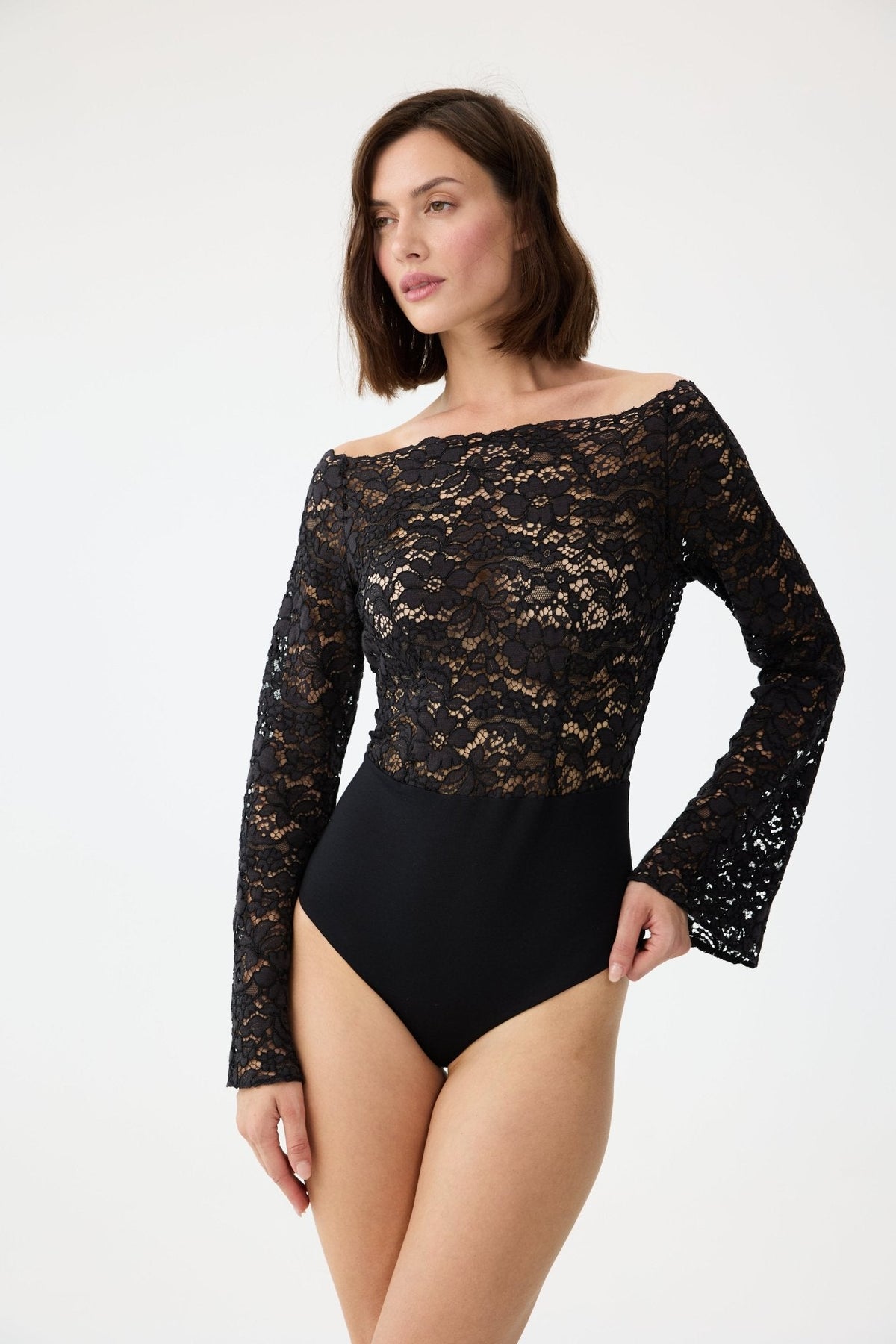
The Molise shirt open and thrown over the cream Maglie bodysuit, with slim trousers and flat shoes. The bodysuit holds the waistline, the shirt adds structure. It is the simplest way to make a casual outfit look considered.
View our shirt collection · View our bodysuit collection · View our trouser collection
How to care for a shirt so it keeps its class
Even the best-made shirt will age quickly if it is washed badly. A few rules that genuinely extend its life:
- Before washing, fasten all the buttons, including the cuffs. The placket will not twist in the drum and the buttonholes will not stretch.
- Wash cotton at a low temperature and iron it while it is still slightly damp. Iron the collar from the points towards the middle, so you do not push creases to the edges.
- Hand wash silk in cool water or take it to be dry cleaned. Never wring it; press it out in a towel.
- Dry lyocell flat and iron it at a low temperature.
- Store shirts on hangers with wide shoulders. A thin wire hanger leaves bulges on the shoulders that are hard to remove afterwards.
Frequently asked questions
How much should a good women’s shirt cost?
The price of a good shirt comes from three things: the fabric, the sewing time and the scale of production. Silk costs many times more than polyester, and the collar, placket and cuffs are the most labour-intensive parts. A shirt sewn in a short series in Poland will always cost more than a mass-produced one, but instead of one season it lasts for years. It is better to compare the cost per wear than the price on the label.
How do you check whether a shirt is see-through?
Hold it up to daylight and put your hand underneath. If you can see its shape, a light shirt will show through on the body. In a shop, always try light shirts on in daylight, not only under the fitting-room lamps.
Why does a shirt gape at the bust?
Most often because a button does not fall at the widest point of the chest, or the front of the shirt is cut without enough room. It is a construction fault, not a matter of size. A larger size usually does not help, because the shirt becomes too wide at the shoulders.
Is a silk shirt suitable for every day?
Yes. Silk regulates temperature and is comfortable all day, and in the office it looks more elegant than cotton. It only needs gentler washing. If comfort and easier care matter to you, lyocell is a good compromise.
Which shirt to choose under a blazer?
A fitted one, with a collar that is not too soft, so that it keeps its shape on the blazer lapels. An oversized shirt under a blazer creates excess fabric at the waist. If you want to avoid the shirt coming out of your trousers, a bodysuit is an alternative.

Leave a comment
This site is protected by hCaptcha and the hCaptcha Privacy Policy and Terms of Service apply.