

Lyocell (Tencel): How to Wear and Wash It So It Lasts for Years | Saintby
Lyocell drapes like silk, breathes like linen and creases far less than cotton. That is why we choose it more and more often for dresses and shirts. Here we explain what this fabric really is and how to care for it so it lasts for years.

Lyocell (also known as Tencel) is a fibre made from wood cellulose in an environmentally friendly process. It is soft like silk, breathable like linen, durable and resistant to creasing, clearly more so than cotton or linen. Wash it at up to 30 degrees with a mild detergent and iron it inside out with a warm iron. Thanks to its thermoregulating properties it works all year round.
What is lyocell (Tencel)?
Lyocell, also known by its trade name Tencel, is a cellulose fibre made from wood pulp, most often from eucalyptus trees. It has been produced since the 1970s, and the process is similar to making viscose, except that it runs in a closed loop without toxic solvents. That is why lyocell is considered one of the most eco-friendly fabrics: it uses little water, and a worn-out garment is biodegradable.
It is often described as a material that combines the best qualities of three fabrics: it drapes on the body like silk, breathes like linen and is as easy to wash as cotton. That is why lyocell appears more and more often in dresses, shirts and light skirts.
Does lyocell crease?
Yes, but much less than cotton or linen, and that is one of its biggest advantages in everyday wear. Lyocell fibres are flexible and resilient, so small creases from wearing largely drop out on their own and the fabric returns to its shape. A lyocell dress looks much fresher at the end of the day than its cotton or linen equivalent, although it is not completely crease-proof. The material is also durable and does not stretch, so the garment keeps its shape for years.
There is one more pleasant quality: lyocell naturally tends to smooth out under its own weight. Hung on a hanger after washing, it often smooths out by itself, without ironing.
How to wash lyocell
Caring for lyocell is simple, simpler than its refined texture might suggest. It is safest to wash it at up to 30 degrees with a mild detergent for delicates. The fabric is highly stain-resistant, so many marks come out straight away, which makes it hygienic and practical.
An important note: lyocell is often blended with other fibres (cotton, silk, wool), and blends can change the care requirements. That is why you should always check the label of the specific garment before washing. It is one rule that protects every more expensive piece in your wardrobe.
How to iron lyocell
Because lyocell creases so little, ironing is usually just a few light passes of the iron. The key rule: do not use a high temperature. An overheated iron can scorch the cellulose fibres and damage the fabric for good. Iron it inside out and, to be safe, place a thin cotton cloth between the fabric and the iron.
There is also a simpler way: hang the wet lyocell garment on a hanger and let it dry. The fabric naturally tends to smooth out under its own weight, so ironing is often not needed at all.
Pros and cons of lyocell
| Pros | Things to keep in mind |
|---|---|
| Soft, silky to the touch | More expensive than cotton or viscose |
| Breathes and absorbs moisture | Blends change the care |
| Resistant to creasing | Does not tolerate high ironing temperatures |
| Thermoregulating, for all year round | |
| Eco-friendly and biodegradable | |
| Durable, does not stretch |
Thermoregulation means lyocell is not just for summer. It suits light blouses and dresses, but also warmer transitional clothing, so you can wear it all year round. If you value natural, practical fabrics, it is also worth getting to know related materials, which we describe in our guide to natural fabrics.
At Saintby we use lyocell (Tencel) in tops, dresses and trousers. See our pieces made from this fabric.
See Saintby dressesTencel in the Saintby collection
Because lyocell drapes so well and is comfortable to wear all day, we like to use it in our designs. Here are three Tencel pieces from different categories:
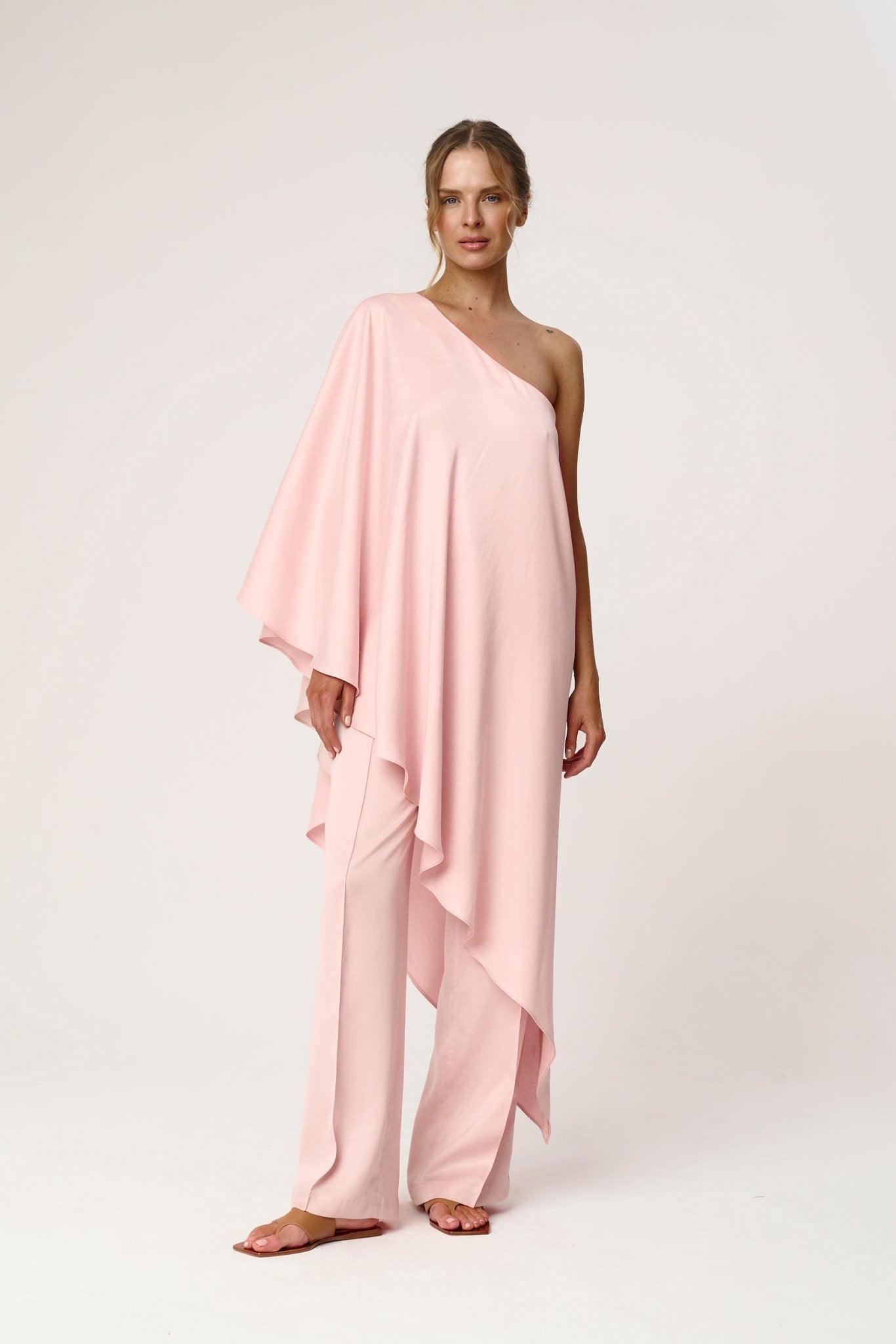
 Pink one-shoulder top Lavello Tencel top
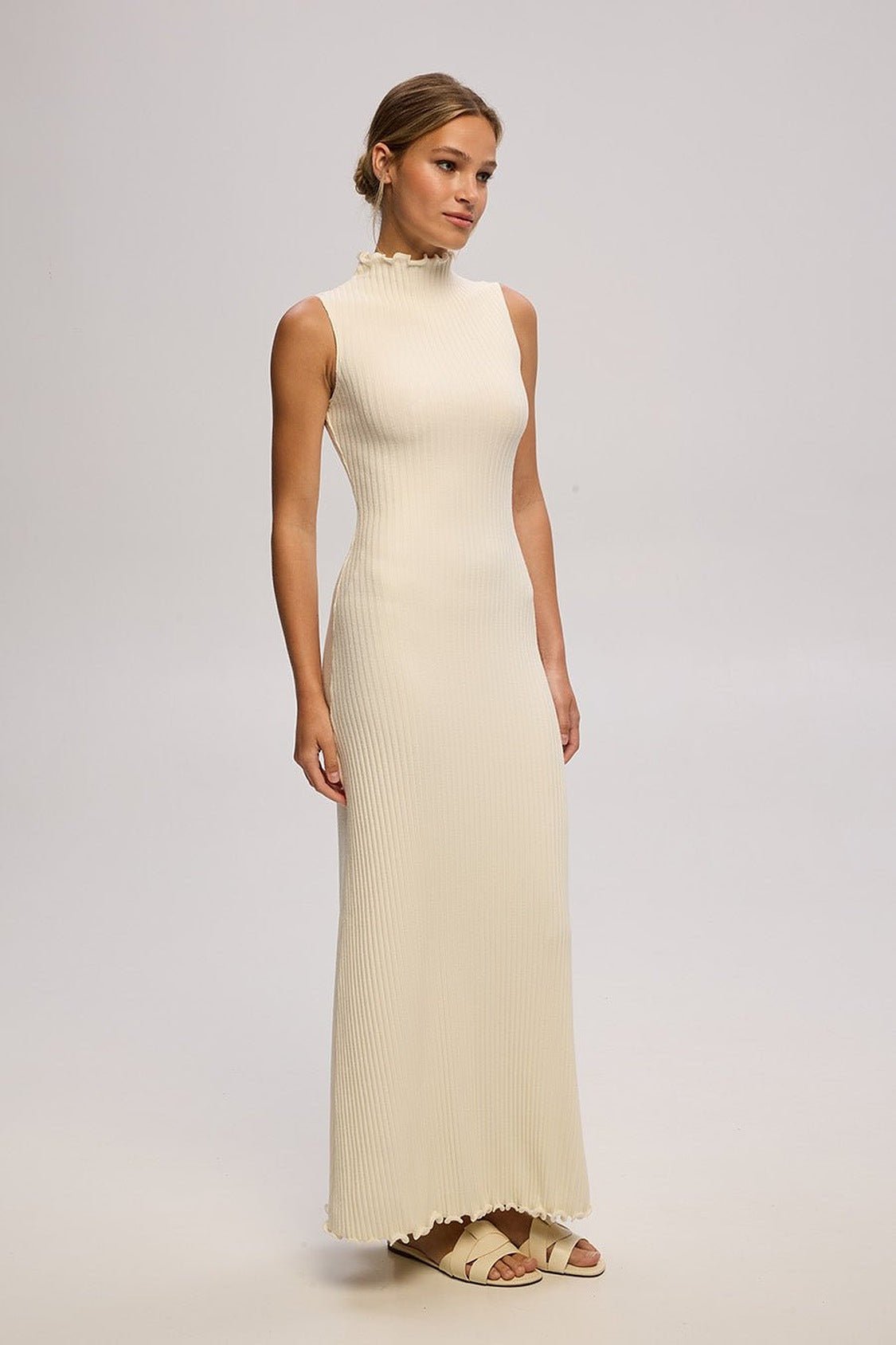
 Chocolate maxi dress Rossano Tencel dress
 Pink trousers with a crease Cecina Tencel trousers
You will find the full composition and size availability on each product page. See also the full collections: shirts, dresses, trousers.
Frequently asked questions
Is lyocell a natural or a synthetic fabric?
Lyocell is a semi-synthetic fibre: it is made from a natural raw material (wood cellulose) that is processed chemically. It is classed as a cellulose fibre, like viscose. Thanks to its natural origin, it is biodegradable.
Is lyocell warm?
Lyocell is thermoregulating, so it adapts to your body temperature. It does not warm like wool, but it does not cool as strongly as pure linen either. That is why it works all year round, in summer and on cooler days.
Does lyocell shrink in the wash?
Washed as recommended, at up to 30 degrees, lyocell keeps its shape and does not shrink. The risk comes with high washing or drying temperatures, so it is worth following the care label.
Is lyocell better than cotton?
Lyocell is more absorbent, creases less and wicks moisture better than cotton, and it is also softer to the touch. Cotton can be cheaper and easier to care for. The choice depends on the use, but in premium clothing lyocell often wins on comfort.
Author: Anna Baj, founder of Saintby. The brand designs and makes premium womenswear in Poland.

Leave a comment
This site is protected by hCaptcha and the hCaptcha Privacy Policy and Terms of Service apply.